
Russian marketing has long known the genre of communication ‘on the edge’. Tanuki spent years building around provocation, sexualised imagery and a confrontational tone; later the brand faced a different kind of pressure — an organised attack on advertising featuring a Black man and rainbow symbolism. Internationally, the same professional memory includes Pepsi and Kendall Jenner, Balenciaga’s children’s campaign, Bumble’s celibacy billboards, Apple’s Crush! and Adidas’s ‘you survived the Boston Marathon’ email.
A strong reputation function begins before the scandal
In 2026, however, I am not interested in compiling a catalogue of brands that ‘got it wrong’. That genre quickly becomes professional schadenfreude and teaches almost nothing.
I am interested in a different discipline: reputation marketing as the management of interpretive risk.
The question is not simply whether people will like a piece of creative. It is what meaning they have reason to extract from it; which social events may change that reading; which groups may be affected disproportionately; and what reputational price the company is prepared to pay if interpretation escapes the author’s intention.
A strong reputation function does not begin after a scandal. It begins while the creative can still be withheld.
The PREDUBEZHDAI case is not interesting because of the grave. It is interesting because of the mechanism
The starting point for this essay was a PREDUBEZHDAI visual for OKKULT Hair Perfume in a space that reads as a burial site. Some viewers saw a child’s grave; others assumed it was a pet cemetery.
While the case was being discussed, founder Anastasia Mironova publicly supplied the context. PREDUBEZHDAI was conceived as a ‘brand — an archive of memories’, including collective memories, and this image was connected to the pain of losing beloved pets. She cited Demeter Funeral Home and Serge Lutens L’Orpheline as cultural parallels, deliberately placing the fragrance in a tradition that works with memory, death, melancholy and loss.
That clarification matters. It removes one hypothesis — that the cemetery was merely random shock decoration. It does not remove the marketing question. The authorial intention became known; the audience’s interpretations did not disappear.
There is little value in arguing about whose grave is in the image. Before any explanation appeared, one frame had already produced several stories: universal fear of losing a partner or parent; the death of a child; the death of a pet; or exactly the artistic territory the creator intended — an archive of memory and grief.
This is not a failure of perception. It is how communication works. Meaning does not live inside a .psd file; it emerges where an image meets a person’s experience.
Why people were triggered: four overlapping mechanisms
The reaction cannot be reduced to one reason. Four mechanisms were operating at the same time: narrative ambiguity, a collision between sacred and commercial value, heightened mortality salience, and a wider deficit of trust.
1. Ambiguity forced the audience to complete the story
The less context a visual provides, the more meaning the viewer must construct. In a neutral subject this may create intrigue. With death and loss, it becomes a projection screen.
The image did not tell the viewer who was buried, why the product was there or what connected the place to the fragrance. That causal and semantic work was therefore transferred to the audience.
Before Mironova’s explanation, some users filled the gap with the heaviest available interpretation. This is interpretive risk: not ‘people understood it incorrectly’, but ‘the communication enabled several high-risk readings and supplied no hierarchy between them’.
2. Two normative spheres collided: grief and selling
Philip Tetlock and Alan Fiske used the term taboo trade-offs for situations in which sacred or morally protected values collide with market logic. People respond not merely with negative emotion but with moral outrage: love, children, death, honour or grief appear to have been placed inside the same exchange system as money.
This does not mean death is forbidden in commercial culture. Fragrance, fashion, cinema and contemporary art constantly work with it. But a commercial frame changes the burden of meaning.
When a product and the words Hair Perfume appear beside a burial place, part of the audience may read not ‘a fragrance about living through loss’ but ‘loss used as an attention asset for a product’. If the relationship between product and sensitive symbol is not legible, the symbol can look like raw material for a sale.
That is what separates a dark visual from a reputationally dangerous one: the impression that something a person regards as non-commercialisable has been commercialised.
3. A symbol of death entered an environment of heightened mortality salience
The answer to ‘why now?’ is not that people became weaker or more easily offended. Context changes the cognitive cost of a symbol.
Terror Management Theory describes mortality salience — the increased accessibility of thoughts about one’s own death and the death of loved ones. A 2025 systematic review covered 112 experiments in the consumer domain; its meta-analysis included 70 studies and 125 effects. The overall effect on consumer responses was small but positive (g=0.21), while its direction varied from a preference for the familiar and culturally close to prosocial behaviour and changed consumption.
The theory is not a magic marketing button, and the effects are heterogeneous. The useful point is more modest: reminders of mortality can alter how subsequent information is processed and how consumer decisions are made.
More direct evidence comes from collective trauma. A study of 4,675 adults after the Boston Marathon bombings found that repeated media exposure was associated with elevated acute stress; an intense media dose could be linked with a stronger reaction than direct proximity to the event. A separate three-year study described a cycle: traumatic media exposure led to stress symptoms, anxiety about future events and then greater consumption of traumatic content.
Russian evidence is more nuanced than the slogan ‘everyone is exhausted’. In December 2025, VCIOM called stress a new social constant: its index reached 50.6 out of 100, compared with 41.8 in 2022, and 37% reported frequent stress. The index reached 66.5 among younger millennials and 60.1 among older millennials.
In summer 2026, positive emotion still prevailed nationally: 31% were classified as cheerful and 23% as anxious. Yet the media profile matters. Anxiety reached 32% among active internet users, compared with 15% among active television viewers; it was 30% in Moscow and St Petersburg. This is particularly relevant to the urban digital environment in which fashion and beauty creative circulates.
FOM added the content of that anxiety: 43% worried about the health of loved ones, 33% about the future of children and grandchildren, and 35% named nuclear war among global fears. Reputational risk is shaped not only by the symbol itself but by the density of related themes in the audience’s lived experience and media environment.
A grave, the word ‘survived’, an image of a child or the destruction of creative objects therefore costs a brand differently at different historical moments. Creative does not age in a vacuum; the context around it ages.
4. In a low-trust environment, a brand is treated as a social actor
The 2026 Edelman Trust Barometer describes a global retreat into insularity: 70% of respondents were unwilling or hesitant to trust people with different values, facts, cultural backgrounds or approaches to social problems.
Edelman’s brand report adds a commercial dimension. Eighty-eight per cent regarded trust as an important or critical purchase criterion — on a level with quality and value — while 54% felt a connection with people who used the same brands.
A brand is therefore no longer read merely as a faceless producer of shampoo or coats. It can become a social actor and a marker of identity.
Functional and ethical failures are processed differently. A 2026 study in the Journal of Retailing and Consumer Services involving 862 participants found that functional breaches more often prompted withdrawal, while ethical breaches produced indignation and negative word of mouth. A faulty dispenser irritates. A controversial packaging of emotion asks the consumer to make a moral judgment about the company.
Why the same frame might have passed more quietly in calmer times
The careful word is might. We cannot prove the counterfactual claim that ‘nobody would have noticed in 2016’. We can, however, describe the mechanism of contextual amplification.
REPUTATIONAL RISK = SYMBOL SENSITIVITY × TOPIC SALIENCE × DENSITY OF LIVED EXPERIENCE × INTERPRETIVE AMBIGUITY × COMMERCIAL INCONGRUITY.
This is not a literal Excel formula but a management model. A grave is already a highly sensitive symbol. A news environment saturated with death, threat and loss raises its contextual salience. An unexplained burial raises ambiguity. A commercial product beside it raises the risk of a taboo trade-off. The same creative becomes a different object without changing a single pixel.
Apple’s Crush! is an unusually clear example. The product idea was logical: the new iPad contains many creative tools. Yet in 2024, amid anxiety among creative professions about generative AI, the hydraulic press was read as technology destroying human creativity. Apple apologised and did not proceed with television placement.
Adidas made an even simpler mistake in 2017. ‘Congrats, you survived the Boston Marathon!’ entered a city whose public memory still contained the 2013 bombing. Context is not the background to communication. In sensitive territory, it becomes a co-author.
Is it art? For marketing, the question is framed incorrectly
Mironova’s explanation restores an artistic logic: a memory archive, grief for pets, Demeter Funeral Home and Serge Lutens L’Orpheline. None of those references is automatically appropriate or inappropriate. The problem is that commercial communication cannot be settled by saying ‘if it produced emotion, it worked’.
In art, conflict can be an independent value. Business adds a final variable: BRAND EFFECT. A more complete chain is INTENT → IMAGE → CONTEXT → PERSONAL EXPERIENCE → INTERPRETATION → REACTION → BRAND EFFECT.
A useful test is to remove the logo and the product. What statement remains? Then return the product. Does it deepen the statement, or does it begin to exploit the emotion? The question is not whether the work is ‘real art’, but whether its commercial presence is legitimate.
Attribution also matters. Is the emotion attached to the subject, the work, the product, or the belief that the brand is using pain? Research on controversial advertising connects outrage with ad avoidance and negative word of mouth. Virality is not insurance. High memorability can be a pure reputational loss.
Reputation marketing before publication: the system many brands lack
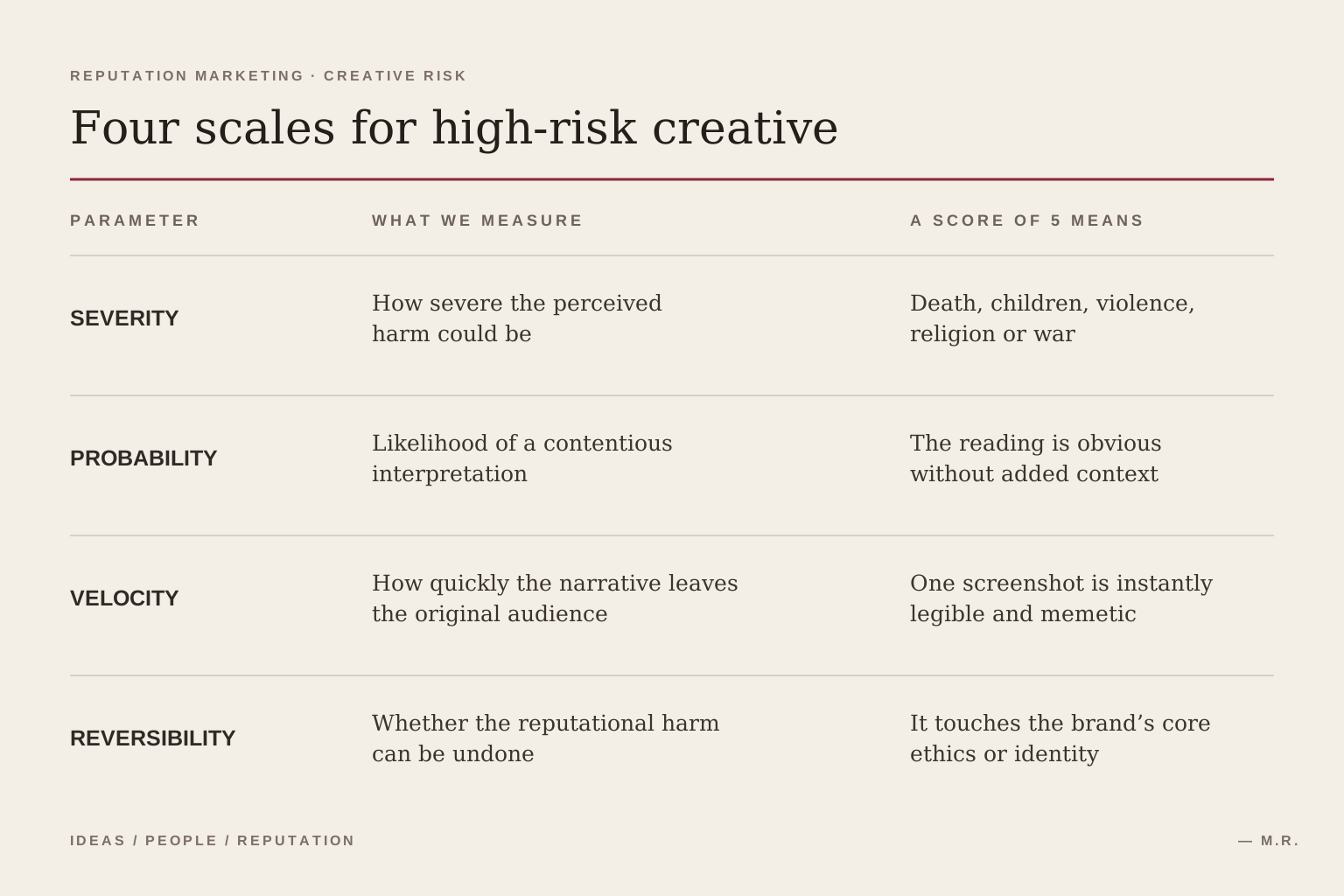
Legal review of logos, claims and prohibited words is common. A structured review of symbolic risk is not. High-risk creative needs a small but explicit architecture before it enters production or media.
Step 1. Context radar — a weekly map of public sensitivity
Review the dominant news of the previous 7–14 days. Has there been a mass event, tragedy, court case, conflict or regulatory change? Which subjects recur in audience conversations? Have symbols acquired a new meaning? Are regional interpretations different? For a global brand this is not optional localisation; it is the basic condition of responsible distribution.
Step 2. Vulnerability map — not ‘women 25–34’, but lived experience
Demographics are too crude for sensitivity work. Map experience states: parenting and reproductive history; bereavement; illness; violence; migration and cultural identity; religion; pet loss; war and military experience. The point is not to prohibit every symbol that may hurt someone. It is to see where the burden of interpretation may fall disproportionately.
Step 3. Sacred-value check
Ask whether the creative uses a morally protected value as merchandising scenery. Children, death, funerals, religion, disability, war, sexual violence, motherhood and national memory can all enter commercial culture — but never as neutral props. The brand needs a legible right to speak and a substantive connection between symbol and product.
Step 4. Screenshot test
A twelve-slide presentation rarely travels with the campaign. One frame does. Review the creative without its caption, previous post or founder’s explanation. Place it beneath a hostile Telegram headline. If the whole ethical defence lives outside the frame, the communication is structurally fragile.
Step 5. Red-team review
Bring in an independent communications specialist, customer-care or community representative, a local cultural expert and, where relevant, a domain expert. Their task is not to improve the idea but to break its interpretation.
What is the worst good-faith reading? What headline would a critic write? Which vulnerable group carries the cost? What current news changes the frame? Is the CEO prepared to repeat the rationale publicly? Would the brand defend the decision or admit an error? These questions are cheaper before publication than after it.
Step 6. Risk score
A high score is not an automatic ban. It means senior approval, a prepared response plan and a conscious acceptance of possible consequences. The point is to replace taste-based argument with an explicit decision.
When negativity arrives, classify the crisis before apologising
Timothy Coombs’s Situational Crisis Communication Theory starts with attributed responsibility. In a preventable crisis, denial and minimisation are weak strategies; rebuilding becomes important. But not every public conflict is a preventable failure.
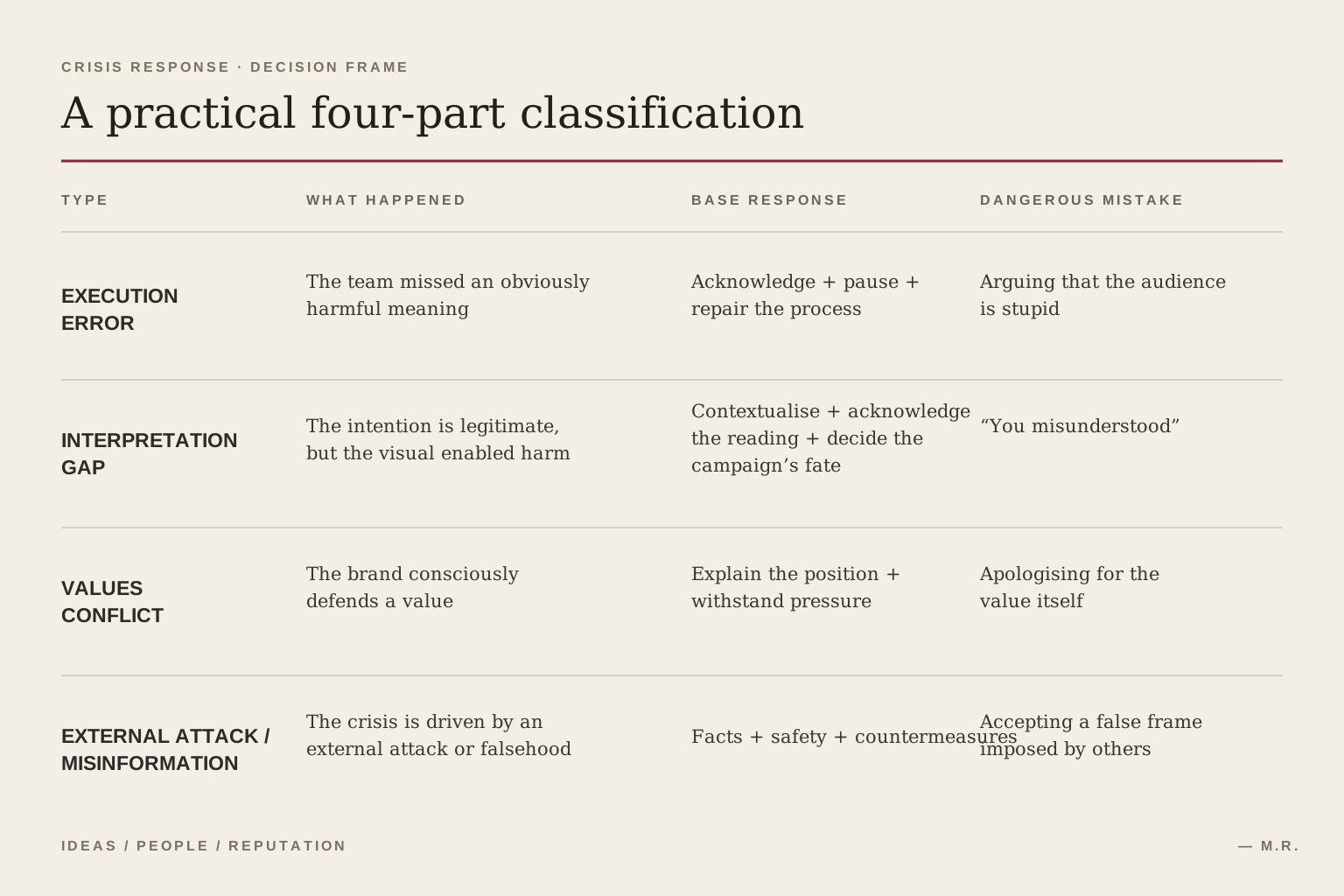
An execution error, interpretation gap, values conflict and external attack require different responses. A universal apology can be as damaging as universal denial.
Mironova’s public comment is contextualisation rather than apology. That can be appropriate for an interpretation gap, but it does not by itself decide the fate of the visual, acknowledge the full range of readings or explain the legitimacy of placing a commercial product beside the symbol.
The first 90 minutes: a protocol, not a writing contest
PRSA describes the opening period as the Golden Hour. Activate the crisis team, verify facts, pause scheduled content, align internally, prepare a holding statement and identify one spokesperson.
Minutes 0–15: pause media, auto-posting, email and partner placements; preserve assets, approvals and the timeline; appoint one decision owner. Do not delete chaotically and destroy evidence of what happened.
Minutes 15–45: separate facts from interpretations; identify affected groups; assess legal or physical risk and the velocity of spread; classify the crisis. Minutes 45–90: choose a strategy and issue the first signal.
A time-buying statement should acknowledge the issue and say when the next update will arrive. An admitted-error statement should name what was wrong and what has stopped. A legitimate artistic-frame statement may explain intent, but it must also recognise why another reading was possible.
Why ‘we are sorry you perceived it that way’ usually makes things worse
The phrase moves responsibility from the brand’s action to the other person’s sensitivity. The audience experiences a second breach: first the creative, then the suggestion that the problem exists only in its perception.
An operational apology contains five elements: what we did; what was wrong with it; what responsibility we accept; what we have stopped or changed immediately; and what will change in the process. An apology without corrective action is not crisis management. It is another piece of content.
What international cases show when we study mechanics rather than scandal
These cases matter not because large brands are easy targets, but because each exposes a different failure mode and a different response logic.


Pepsi: removing the creative is not enough, but speed matters
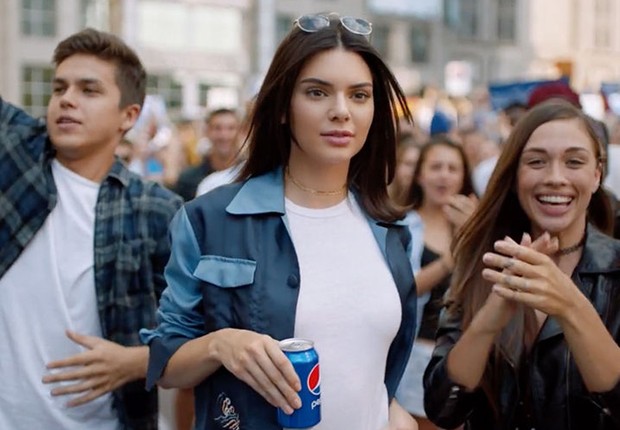
After the backlash around the Kendall Jenner advert, Pepsi stated on 5 April 2017 that it had tried to project a message of unity but had ‘missed the mark’. It apologised and stopped the rollout.
The lesson is straightforward: when a company creates a preventable cultural mismatch, debating the purity of its intention is ineffective. Speed limits distribution, but accountability is what begins repair.
Balenciaga: blame-shifting can become a second crisis
After its 2022 campaigns, Balenciaga initially filed a $25 million lawsuit against contractors, then dropped it. Demna and the CEO accepted responsibility, and the company announced concrete changes: new validation processes, an image board, external expertise, training and work with specialist organisations.
In a preventable crisis, process is more persuasive than apology copy. Until the organisation explains what will change, the audience has reason to believe the failure is reproducible.
Bumble: corrective action should address the area of harm
After billboards that mocked celibacy, Bumble apologised and removed the campaign. It also announced support for relevant organisations and offered them advertising space.
Corrective action is stronger when it is connected to the value the brand violated — in this case, women’s choice and agency — rather than functioning as an unrelated charitable gesture.
Apple: a sound product insight cannot cancel poor cultural timing
Apple acknowledged that Crush! had ‘missed the mark’ and declined to proceed with television placement. A creative idea can be understood correctly at product level and still be rejected at cultural level.
Tanuki: sometimes apologising means destroying your own position
The Russian counterexample teaches the reverse lesson. In 2021, the brand faced an organised attack over advertising featuring a Black man and rainbow imagery and did not abandon its position. This was not an execution error but a values conflict combined with external pressure.
A crisis playbook must therefore contain criteria not only for when to apologise, but for when not to apologise.
Documentation that must exist before a scandal
If a brand has an 80-page tone-of-voice guide but no crisis manual, its communication system is unfinished.
— Reputation Risk Register: themes, probability, severity, vulnerable groups and owner.
— Context Radar: recurring monitoring of news and cultural triggers.
— Sensitivity Review Protocol: who reviews high-risk creative and which questions they ask.
— Crisis Matrix: levels 1–4, service levels, team composition and authority.
— Decision Tree: execution error, interpretation gap, values conflict or attack.
— Holding Statement Library: not ready-made apologies, but templates for the first response.
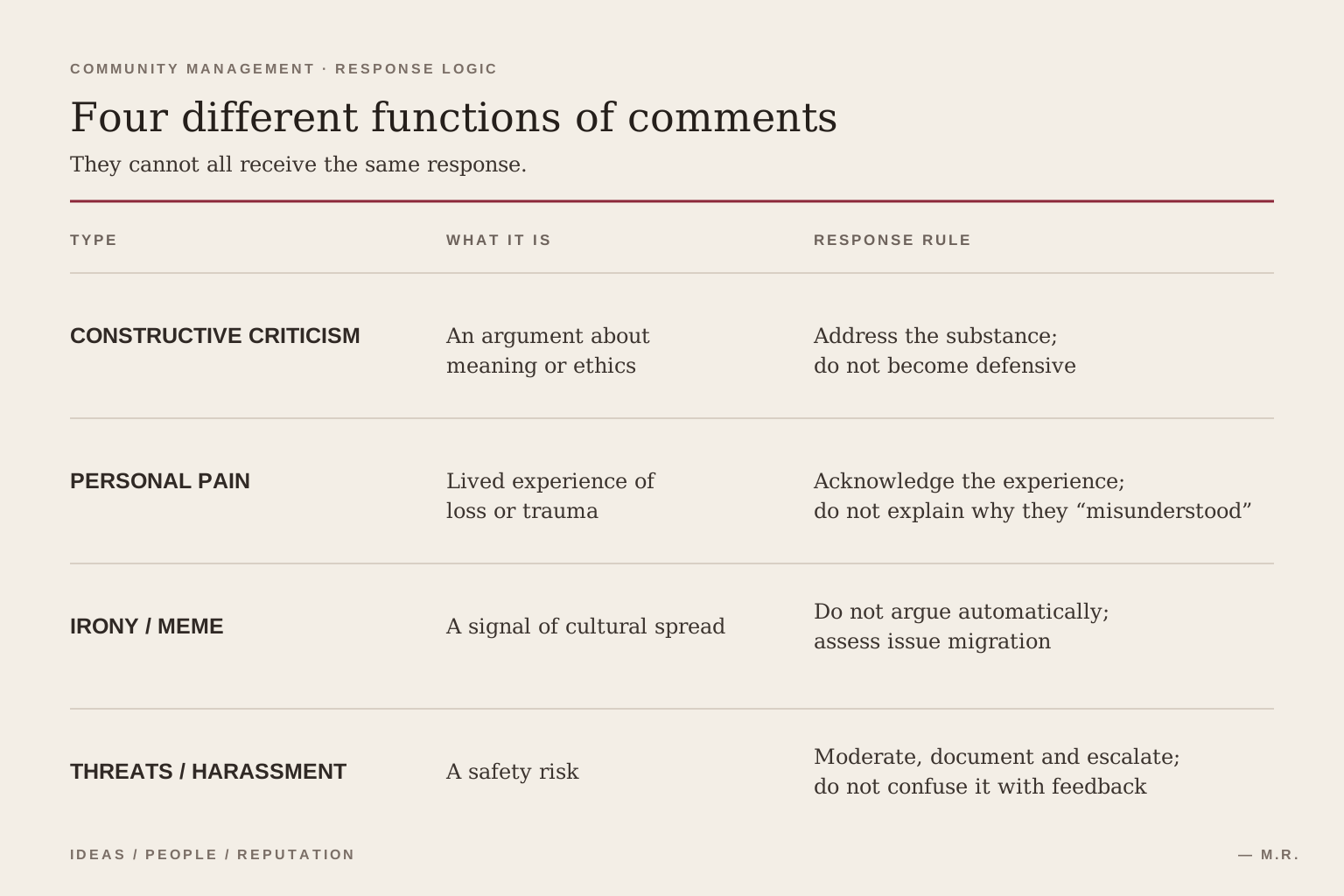
— Moderation Playbook: criticism, personal pain, memes, aggression, threats and media requests.
— Stakeholder Tree: employees, partners, ambassadors, platforms, distributors and investors.
— Dark Site or Crisis Page: a prepared location for official updates.
— Post-mortem Template: signal, blind spot, decision, process change, owner and deadline.
PRSA recommends preparing teams, holding statements, spokesperson roles and approval flows in advance because, during a crisis, the time needed to invent them has already been lost.
How to manage negative comments professionally
The most dangerous brief for community management is ‘fight the hate’. Comments serve at least four different functions, and treating them as one undifferentiated hostile mass compounds the crisis.
A useful phrase for an interpretation gap is: ‘This is not the meaning we intended. But we can see why the image could be read that way.’ It is neither surrender nor gaslighting. The brand holds its intention and the reality of another person’s perception at the same time.
A real reputational crisis or merely a loud post?
The number of negative comments is almost useless on its own. Six groups of indicators matter.
— Velocity: the rate of growth and time required to leave the brand’s own audience.
— Authority spread: whether the issue is picked up by customers, professionals, major creators, media or partners.
— Issue migration: whether people discuss one creative or begin to reassess the whole brand, founder and previous cases.
— Commercial impact: cancellations, refunds, conversion, direct traffic and support load.
— Stakeholder impact: employees, platforms, investors, partners and retail.
— Recovery curve: how long sentiment and business metrics take to return to baseline.
Five thousand comments may be memetic noise with no commercial effect. Fifty reactions from key clients and partners may be a far more dangerous signal.
What PREDUBEZHDAI actually teaches
It does not teach that cemeteries are forbidden, that audiences have become too sensitive or that an artistic brand must avoid death, pain and memory.
It shows five more professional things.
— Authorial intention loses its monopoly over meaning after publication.
— A sensitive symbol in a commercial frame is judged morally as well as aesthetically.
— Current news and emotional context can sharply amplify mortality cues.
— Explaining intent after the reaction is a separate communication strategy, but it cannot erase interpretations already produced.
— Strong reputation marketing does not prohibit risk; it makes risk conscious, measured and manageable.
Why I analyse other people’s mistakes
I do not build my own promotion on brands that ‘failed’. I have no interest in claiming, after the fact, that I would have been smarter than a team whose research, constraints and internal discussions I do not know.
I study consumer attitudes. Outrage is one of the richest datasets the market releases publicly.
A polished success case shows what worked. A crisis shows much more: where moral boundaries sit; how quickly a symbol changes meaning; where brand and audience diverge; what is read as hypocrisy, responsibility, weakness or consistency.
You cannot teach reputation marketing exclusively through cases in which reputation was never placed at risk.
Sensitivity is not timidity
There is a fear that sensitivity review will kill boldness. In practice, boldness without risk intelligence more often kills itself.
Strong creative may be uncomfortable. It may argue. It may enter death, religion, sex, politics, the body, motherhood, war, loneliness or any other difficult territory.
But when a brand enters that territory, it must answer three questions before publication: why do we have the right to speak about this; why in this form; and what will we do if a person sees not a metaphor but their own pain?
In 2026 this is not an ethical bonus. It is a basic qualification for anyone managing a brand’s reputational capital.
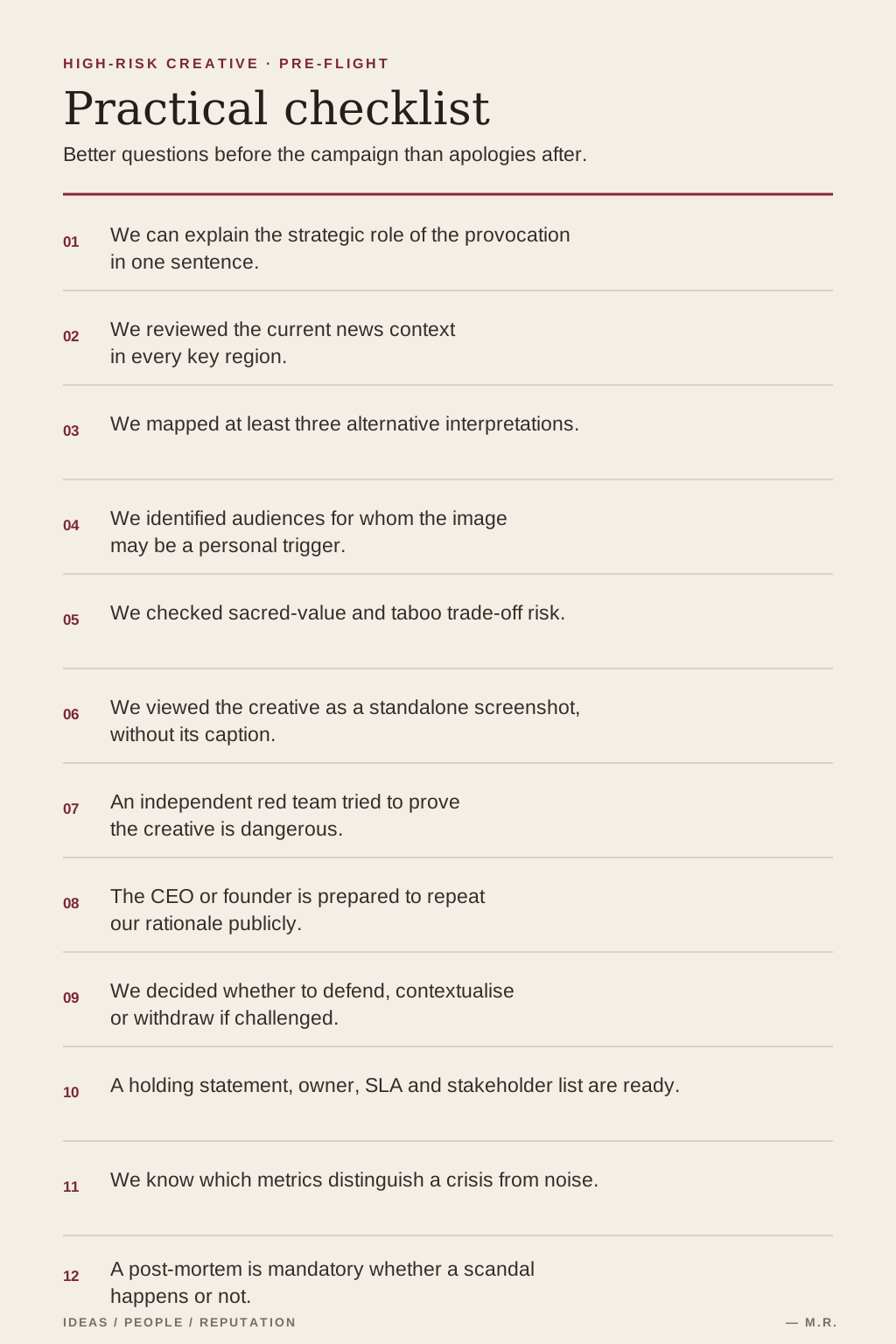
Practical pre-flight checklist for high-risk creative
Methodological note
This essay does not claim who is buried in the PREDUBEZHDAI image. Following Anastasia Mironova’s public comment, the authorial frame is known: the loss of beloved pets. Evidence on stress, mortality salience, infertility and pet bereavement is not used as demographic data for the brand’s audience; no representative public audience profile was identified. The evidence is used to assess the scale of lived experiences and contextual conditions capable of shaping the interpretation of sensitive creative.
Boldness without risk intelligence tends to destroy itself. A strong reputation function begins while the creative can still be withheld.
Sources and research
- Fiske & Tetlock — Taboo Trade-offs
Research on moral reactions when sacred values are pulled into market exchange.
- PNAS — Media and acute stress after the Boston Marathon bombings
A study of media exposure and acute stress after collective trauma, N=4,675.
- Science Advances — Media exposure and the cycle of distress
A three-year longitudinal study of repeated traumatic-media exposure and distress.
- ВЦИОМ — Эмоциональный тонометр, лето 2026
Evidence on emotional climate, media habits and differences between urban and rural groups.
- Edelman Trust Barometer 2026
The global Trust Amid Insularity report on shrinking circles of trust.
- Coombs — Situational Crisis Communication Theory
A framework for matching crisis response to attributed organisational responsibility.
- PRSA — Crisis communication guidance
Guidance on the Golden Hour, holding statements, roles and pre-approved workflows.
- Reuters — Apple apologises for Crush!
Apple’s response and decision not to proceed with television placement.
- Boston Magazine — Adidas Boston Marathon email
The ‘you survived the Boston Marathon’ email and Adidas’s apology.
- PepsiCo — statement on the 2017 campaign
Pepsi’s withdrawal of the campaign and acknowledgement that it missed the mark.
- Vogue — Balenciaga’s response and action plan
Balenciaga’s dropped lawsuit, acceptance of responsibility and process changes.
- AP — Bumble removes celibacy billboards
Bumble’s withdrawal, apology and corrective action in the area of harm.
- WHO — Infertility
The prevalence of a sensitive life experience; not demographic evidence about the brand’s audience.
- ArtReview — Why people hated Apple’s Crush
A documentary still from Apple’s campaign and analysis of its cultural reception.
- Época Negócios — Pepsi withdraws Kendall Jenner commercial
A documentary still from Pepsi’s Live for Now campaign.
- International Journal of Consumer Studies — Mortality salience meta-analysis
A systematic review of 112 experiments and meta-analysis of 125 effects in consumer settings.
- ВЦИОМ — Стресс и как с ним бороться
December 2025 evidence on the stress index and generational differences in Russia.
- ФОМ — Тревоги и опасения россиян
January 2026 evidence on concern for loved ones, children’s futures and global threats.
- Edelman — Brand Growth in an Insular World
A 15-country, 17,688-person study of trust, identity and belonging in brand choice.
- Journal of Retailing and Consumer Services — Brand transgressions
Research distinguishing consumer responses to functional and ethical brand breaches.
- Journal of Retailing and Consumer Services — Controversial advertising
Research connecting outrage with advertising avoidance and negative word of mouth.
- PLOS ONE — Prolonged grief after the death of a pet
Evidence that clinically significant prolonged grief can follow the death of a pet.