At Cosmoscow, I stopped at the 12 STOREEZ stand — not so much because of the stand itself, but because of the beaver. This essay is not a proposal to replace it. I am interested in the next step: how one strong symbol can become not merchandise or another photo opportunity, but an entire system of meaning.
From the beaver to the person beside the brand
In 2026, 12 STOREEZ introduced the beaver as a fully realised mascot: an almost three-metre figure inside a mirrored cube. The brand associated it with diligence, perfectionism, consistency, attention to detail and the urge to keep building and improving the world around it. The mirror adds a second layer: the character not only makes, but stops to look at what has been made.
It is a coherent construction. It carries the founders’ temperament, the company’s product discipline and a rare quality in Russian fashion: an internal culture that can genuinely be read from the outside.
But the strategist and the long-time customer in me asked a different question. What happens if we temporarily set aside how the company describes itself and look from the perspective of someone who has lived beside it for years? Not ‘Who does the brand want to be?’ but ‘Who does its person feel they become in its company?’
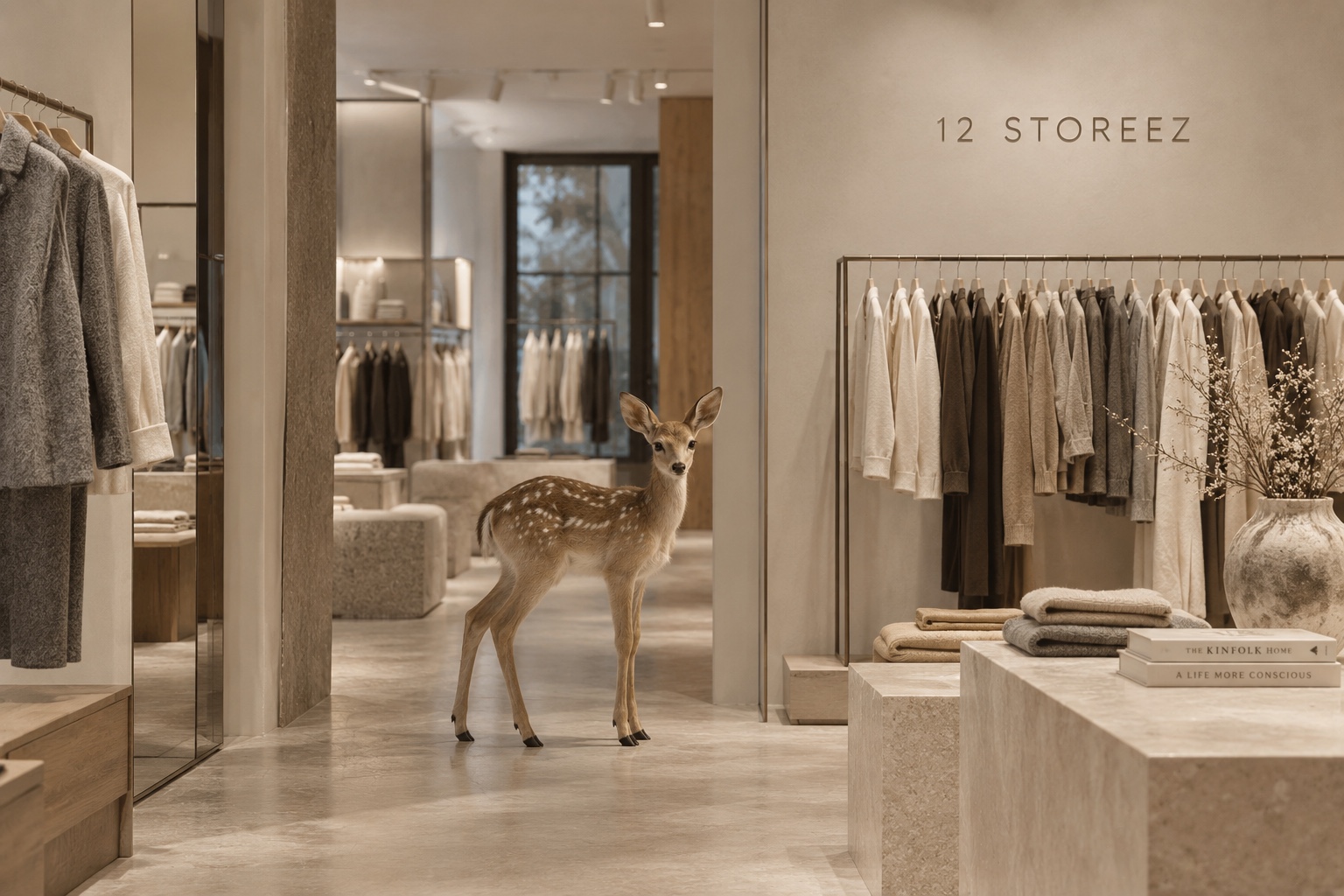
My answer was a young deer.
Why beauty alone is no longer enough
Fashion is operating in a market of weak growth, uncertainty and rising price sensitivity. McKinsey’s outlook for 2026 found that about 70% of consumers planned to spend less, while 80% were actively seeking value — waiting for sales, comparing offers and demanding a more persuasive relationship between price and meaning.
Russia has its own configuration, but the same underlying tension. Fashion Compass and Lamoda estimated that the apparel, footwear and accessories market grew by roughly 6% in value in 2025, to RUB 3.94 trillion, while unit sales fell by 8–10%. The market looks larger until inflation is removed.
When the amount of clothing does not decline but confidence in the future does, a brand is no longer competing only with another brand. It is competing with the decision to buy nothing at all. Communication can no longer remain a decorative layer over product; it has to create emotional, cultural, social and sometimes even worldview value.
In a category where everyone has learned to look beautiful, the advantage is not another beautiful image. It is a proprietary system of meaning.
Why the mascot matters
A mascot performs a function marketing often underestimates: it converts abstract brand qualities into character. ‘Consistency’, ‘attention to detail’ and ‘continuous improvement’ may all be accurate, but they remain corporate language. A beaver turns them into a creature we can imagine acting.
Research on brand anthropomorphism shows that making a brand feel human changes how people evaluate it, talk about it and connect it to their own identity. A strong mascot is not simply a recognition device. It gives the brand a psychologically legible personality.
12 STOREEZ has also used Cosmoscow as a place where a commercial brand can speak in the language of art. The interesting question is therefore not whether the beaver works. It does. The interesting question is what kind of system might come after it.
The beaver from within. The deer from without
As a symbol, the beaver describes the organisation. It builds, improves, returns to its work and builds again. It is an excellent inside-out image of the people who make the brand. I tried the reverse exercise: describing not the company, but the person beside it.
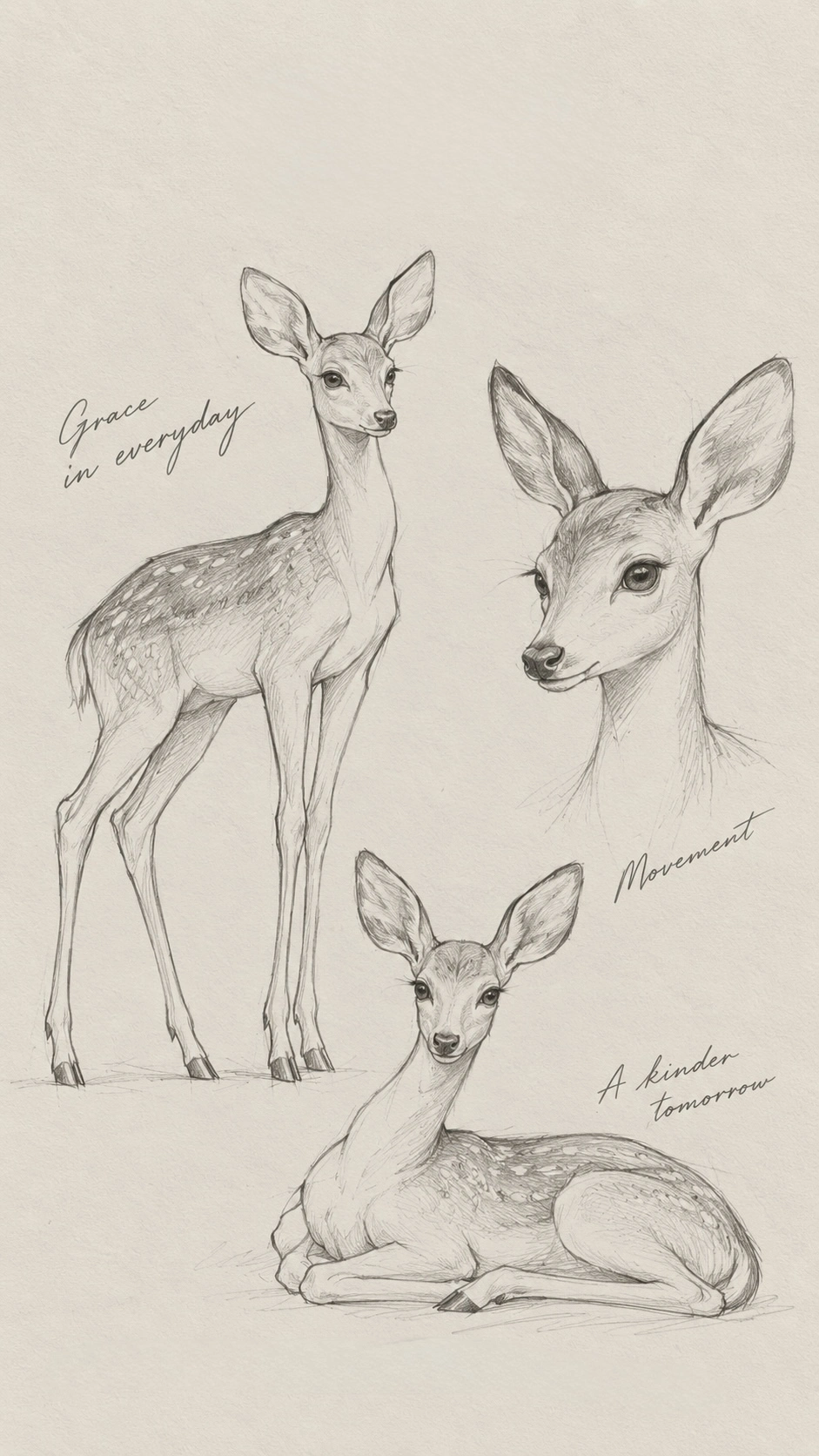
My deer is neither a heraldic adult nor Disney’s Bambi. It is a slightly awkward fawn already convinced of its own elegance: long legs, enormous ears and the expression of someone who left home for coffee and somehow returned in a cashmere coat, silk trousers and carrying another expensive shopping bag.
It is curious, calm but not solemn, mischievous in a well-brought-up way. It likes beautiful things without liking display. At most, it wears an enormous cashmere scarf and gets slightly tangled in it. The awkwardness matters. A flawless character would become another quiet-luxury illustration; the brand itself feels more alive than that.
The beaver says, ‘This is how we work.’ The deer says, ‘This is how I feel beside you.’ A mature brand can benefit from that double perspective more than from forcing one character to explain everything.
An outward-facing mascot as a localisation tool
People increasingly buy not entry into conspicuous status, but recognition of themselves. Under price pressure, a purchase needs more justification, yet ‘more’ does not necessarily mean greater functionality. It may mean cultural proximity, character, humour, ritual or membership in a particular kind of life.
12 STOREEZ already owns a powerful asset: a recognisable aesthetic norm. But an aesthetic alone is not enough for international expansion; it must learn to travel between cultures. A character can enter different contexts without forcing the brand to reinvent itself each time.
Not a photo opportunity, but a story
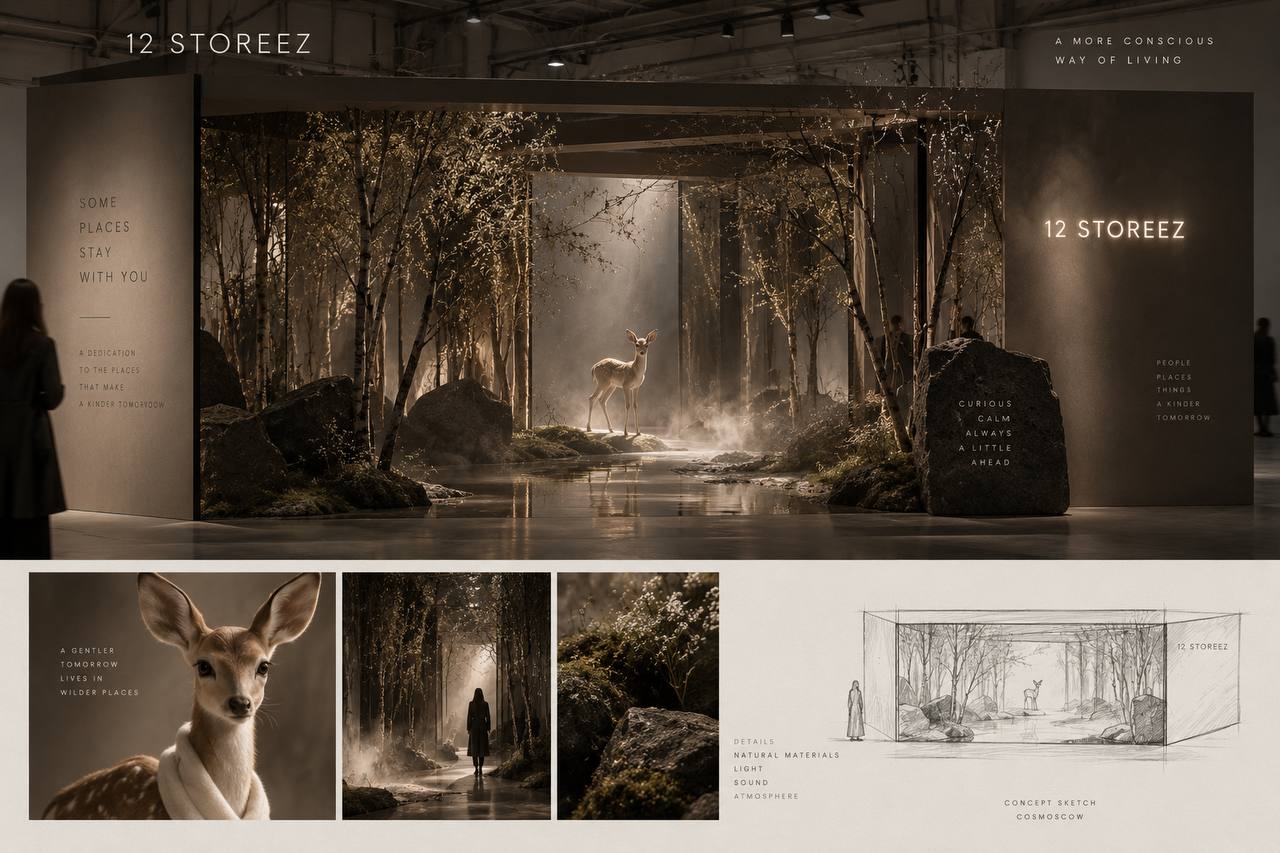
What would happen next? A three-metre deer in another mirrored cube would merely replace one large animal with another. I would build a protected forest instead.
Not a literal set of artificial fir trees, but an immersive installation. Near-darkness. Trees read as verticals and shadows rather than scenery. Spatial sound. Light somewhere ahead. A small deer moves through the forest, disappears, reappears and keeps looking for a way through.
The point is not cuteness but plot. It does not know the route, yet it walks. Curiosity instead of certainty. Movement instead of a finished answer. Light ahead instead of another promise of a perfect life.
Fashion has spent too long selling a finished version of the person: the perfect wardrobe, body, home and holiday. In a period of broad uncertainty, that can alienate rather than attract. A character that is beautiful but still finding its way creates a different relationship.
A beautiful metaphor should pay for its own existence
A beautiful forest is not enough. If a brand builds it as a cultural image, the installation could be connected to a real territory, a real species and a measurable conservation outcome. Not because every fashion company urgently needs an ESG layer — quite the opposite. An abstract ‘we care about nature’ is now more dangerous than useful.
The conservation component must be specific: name a territory or species, establish a baseline, set a measurable goal and report after the action rather than advertising before it. It needs a multi-year horizon rather than a one-off cheque attached to an exhibition.
That might mean stewardship of a territory, habitat restoration, species monitoring, a percentage of a capsule plus a fixed annual contribution, field infrastructure or a scientific programme. The exhibition forest would then exist because the system helps a real one continue to exist elsewhere.
How to avoid turning the story into greenwashing
The relationship between fashion and biodiversity is not decorative. The industry depends on nature at the level of cotton, wool, cashmere and other materials, while sourcing decisions affect soil, water, forests and ecosystems.
I would apply five rules. First, the species or territory must connect to the brand’s real presence. Second, a conservation, scientific or public agency — not a marketing partner — defines what the ecosystem needs. Third, money is separated from beautiful language through a fixed contribution, product percentage or named line of funding.
Fourth, establish a baseline: area, population, ecosystem condition and the change expected within a year. Fifth, be prepared to report what did not work. That is what turns ecological communication from an advertisement for virtue into an adult practice.
A deer that knows how to travel
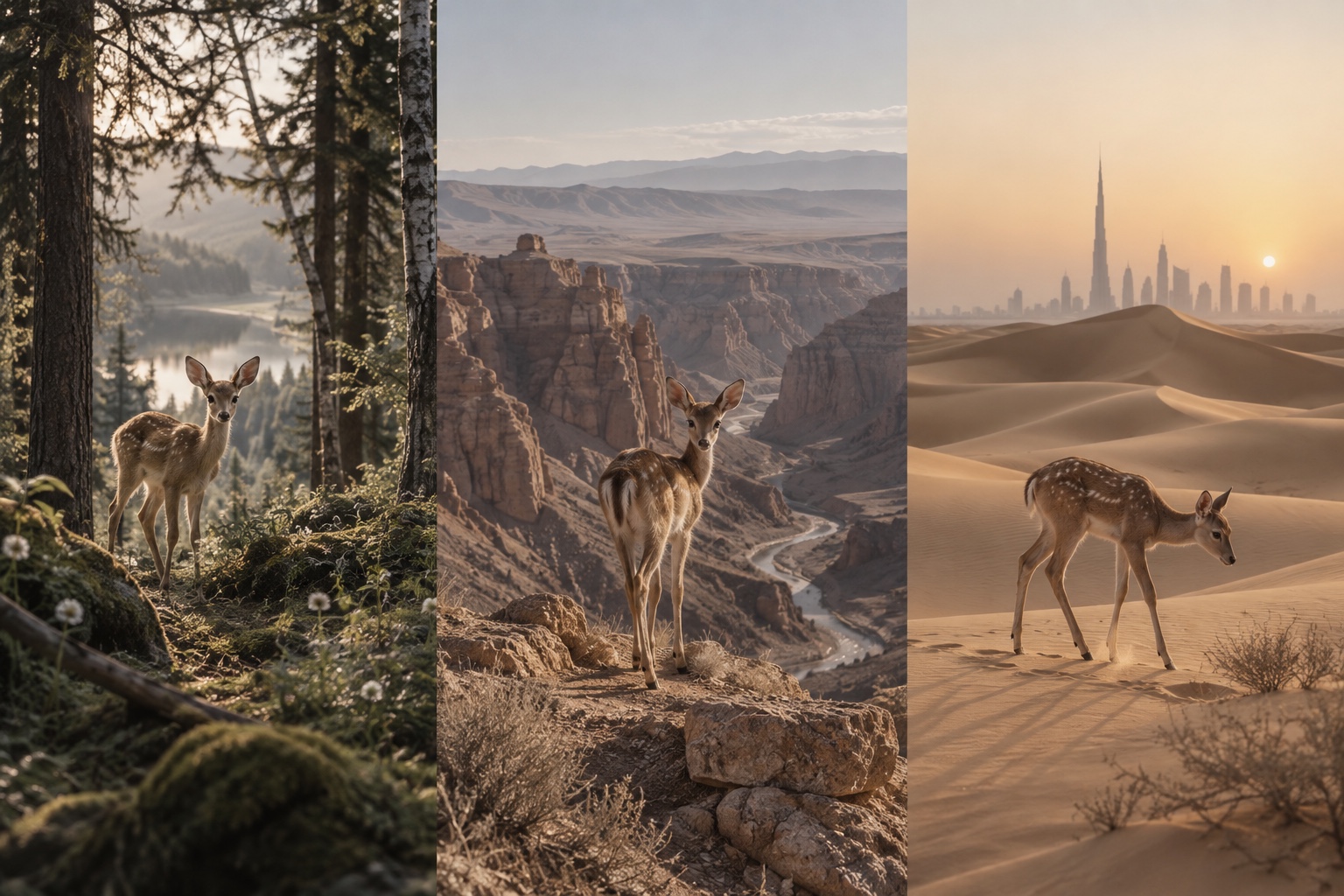
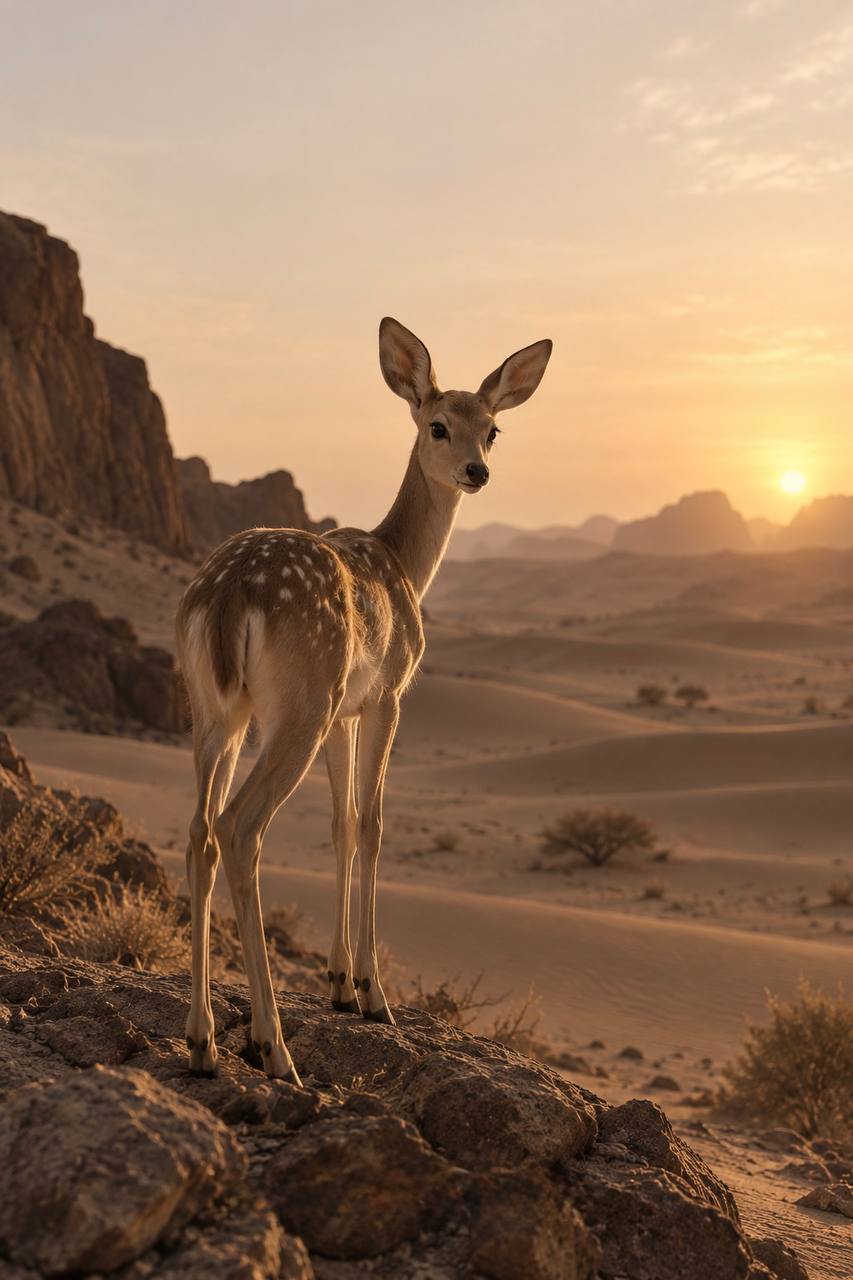
The international footprint of 12 STOREEZ makes the concept more interesting. In Moscow, the character might move through a forest. In the GCC, the landscape changes naturally: there is no need to transplant a Russian birch grove. The space becomes desert, and the deer moves conceptually closer to the gazelle.
Cultural codes require precision. Calling the gazelle an ‘Islamic symbol’ would be a crude simplification. But in Persian literary tradition, āhū or ghazāl has long carried associations of beauty, grace, softness and the liberation of a captured animal. Arabic and Persian poetry give the image resonance without reducing it to ethnographic decoration.
The metaphor can also meet the region’s real ecology. The Arabian sand gazelle, Al Reem, is listed as Vulnerable, with hunting and habitat degradation among its threats. A GCC chapter need not be the Moscow campaign recoloured in sand. It can preserve the character while changing the landscape, species and conservation task.
An international brand should transport meaning between countries, not scenery.
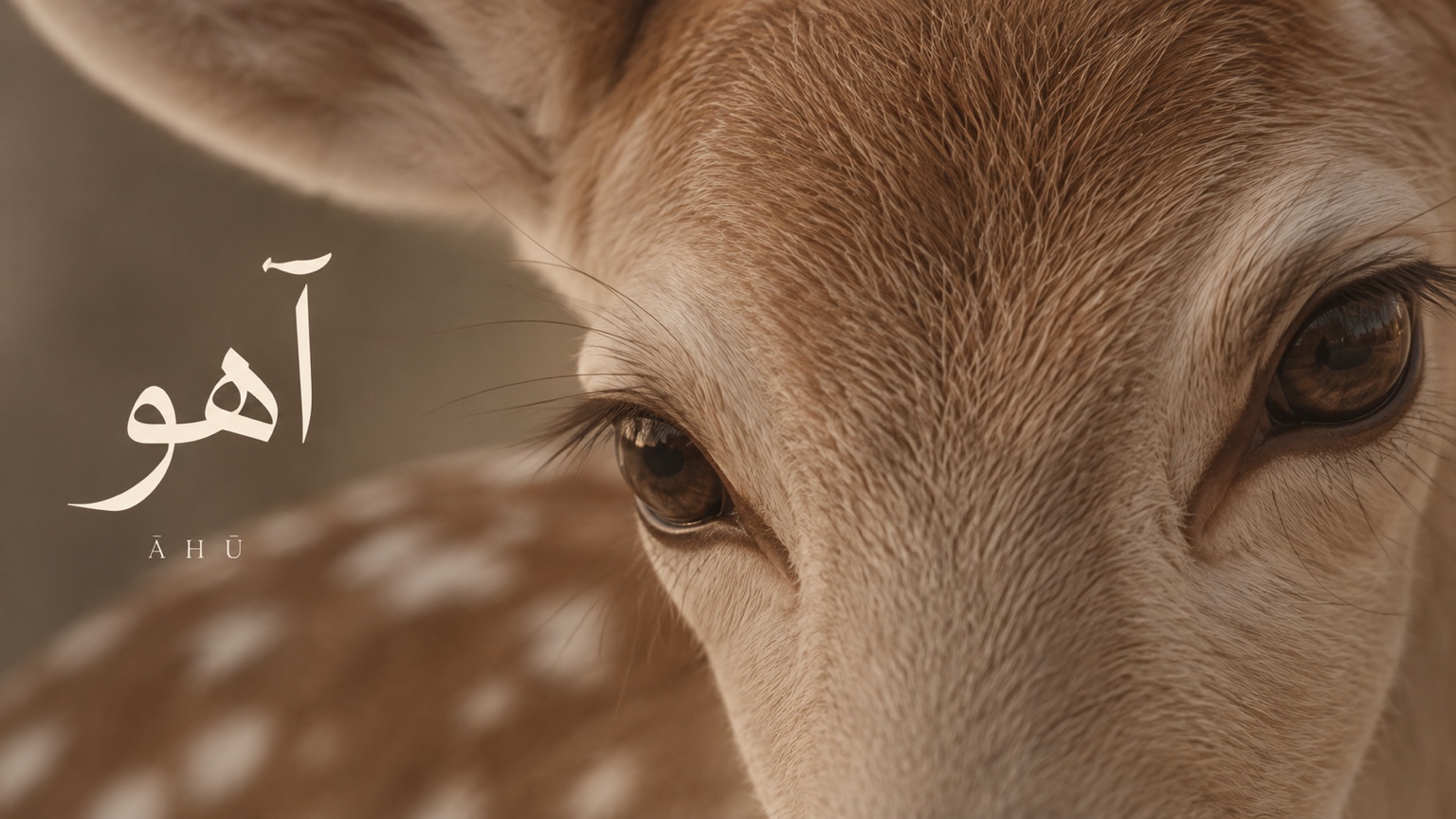
From one stand to a brand world
Seen as a system rather than an exhibition project, the idea has six levels. First, character: the deer has curiosity, soft irony, aesthetic instinct, slight awkwardness and movement. Second, plot: it goes where it has not been, creating stories about cities, travel, growing up, new markets, searching, home and nature.
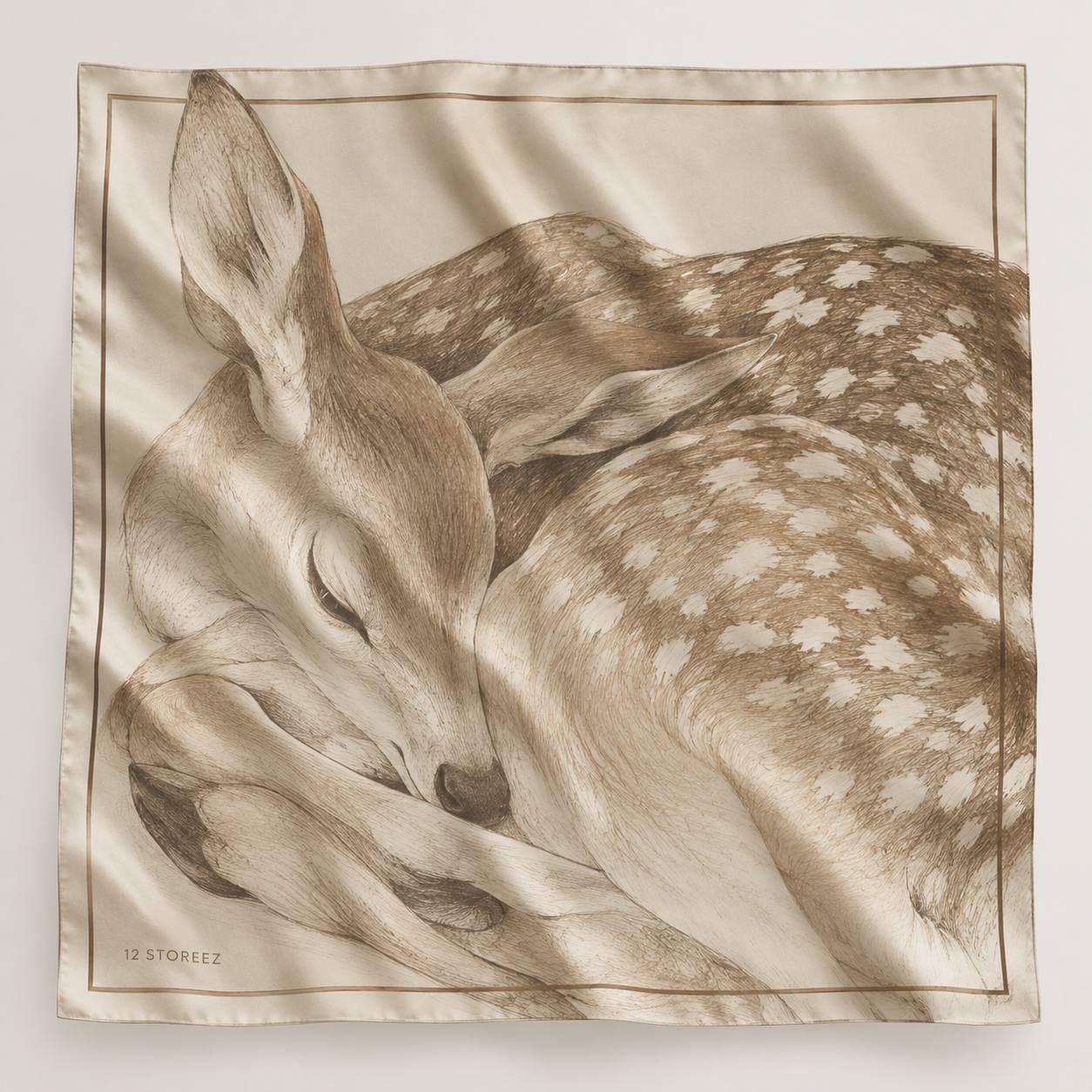
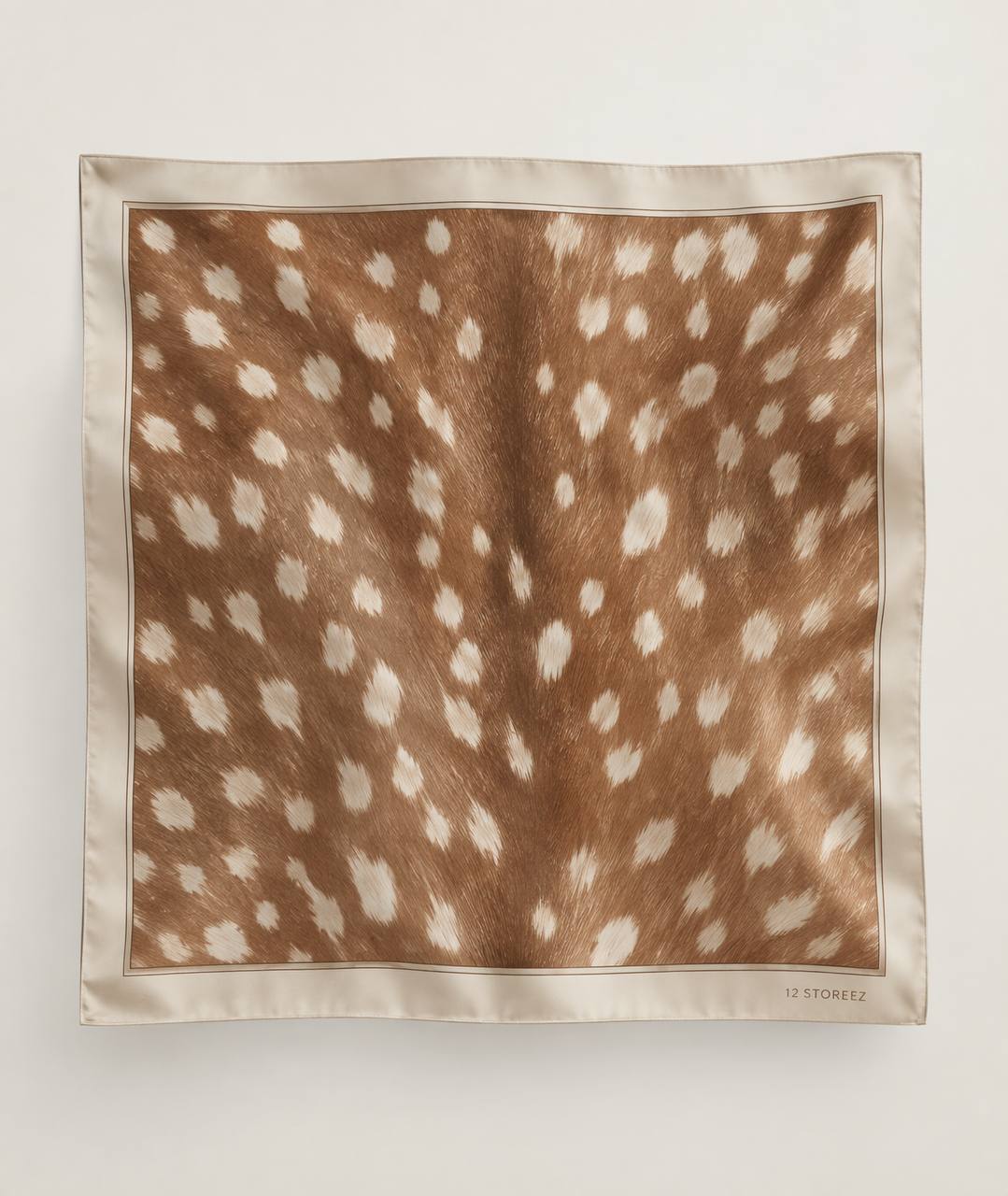
Third, space: Cosmoscow becomes a forest, Dubai a desert, and every market gains its own landscape. The environment does not illustrate a collection; it extends the character. Fourth, product: not a plush deer with a logo, but objects that genuinely belong to the world — a silk scarf, cashmere wrap, small home collection or travel book.
Fifth, action: a real conservation programme keeps the world from collapsing into advertising fantasy. Sixth, data: interaction with the space, returns to the story online, shifts in brand perception, funding and measurable conservation results.
Only then does a mascot become a true brand asset — not because everyone recognises it, but because it can produce new stories for years without losing its character.

What any fashion brand can take from this
Do not ask one symbol to explain the entire brand. The organisation’s internal identity and the customer’s identity may need different characters. Do not confuse visual recognition with a brand world: a world begins when an image gains character, rules, conflict, plot and the ability to develop.
In a price-sensitive period, add value through more than product arguments. Cultural proximity, humour, self-recognition and experience all help justify price. In international expansion, preserve character instead of copying scenery.
If a brand enters a social or environmental subject, connect communication to measurable action. The more beautiful the metaphor, the greater the burden of proof. And do not fear an imperfect character: one that is still searching may feel more contemporary than one that knows everything and lives a perfect life.
Fashion easily mistakes aesthetics for strategy because aesthetics are what we see first. But strong creativity does not begin with ‘What will look beautiful on the stand?’ It begins with a different question: what thought can the brand continue after the stand has been dismantled?
Why the deer, after all
I do not see 12 STOREEZ as a brand that has reached a final destination. It grew from a local project into a company with dozens of stores and an international presence. It learned to speak a recognisable language of contemporary Russian aesthetics. Now comes the harder task: keeping its character while becoming intelligible across cultures without dissolving into global minimalism.
The beaver explains how such a brand is built. I wanted to imagine the character that might explain why someone would follow it.
So beside 12 STOREEZ I still see that long-legged fawn. In cashmere. Slightly tangled in a scarf. Clearly about to go somewhere again — not because it knows the way, but because it intends to find out what lies ahead.
Author’s note. This is an independent strategic exploration and conceptual exercise. It is not affiliated with 12 STOREEZ and does not propose replacing the brand’s existing mascot. The deer is deliberately presented as the psychographic interpretation of a long-time customer.
A mascot becomes an asset not at the moment of recognition, but when it can keep generating stories, spaces, products and action while preserving the brand’s character.
Sources and research
- 12 STOREEZ — About us
Official brand history, international presence and company scale.
- Cosmoscow
The official contemporary-art fair platform and context for its brand partnerships.
- McKinsey & Company — The State of Fashion
Reports on slowing fashion growth, price sensitivity and consumers’ search for value.
- Lamoda — Fashion Compass
Research on the Russian fashion market, sales dynamics and the role of online channels.
- Росстат — потребительские ожидания, II квартал 2026
Official data on consumer confidence and expectations in Russia.
- Journal of Business Research — Anthropomorphic brand management
An integrated review of brand anthropomorphism and its effects on consumer behaviour.
- Journal of Consumer Research — Brand Teasing
Research connecting anthropomorphism, engagement and psychological closeness to brands.
- Deloitte — Consumer Sustainability Report
Evidence on trust in environmental claims and the perceived risk of greenwashing.
- WWF — Living Planet Report 2024
Global evidence on biodiversity and the decline of monitored wildlife populations.
- UNEP — Sustainable and Circular Textiles
The textile sector’s impact on climate, water, pollution and ecosystems.
- Textile Exchange — Biodiversity Landscape Analysis
How fashion materials and supply chains interact with biodiversity.
- Convention on Biological Diversity — Global Biodiversity Framework
International targets for conservation, ecosystem restoration and corporate transparency.
- Encyclopaedia Iranica — The Gazelle in Literature
The cultural history of āhū / ghazāl in the Persian literary tradition.
- Environment Agency — Abu Dhabi: Arabian Sand Gazelle
The status, habitat and threats affecting the Arabian sand gazelle, Al Reem.