
One of the hardest conversations in a period of scarcity is also one of the most ordinary. A strong employee asks for a raise: their responsibilities have grown, the results are there and the market has moved. The manager agrees with almost everything — except the final point. There is no money to review the salary. In a crisis, budget stops being a universal solvent for management problems, and the quality of the system becomes visible.
Scarcity tests architecture, not character
Non-financial motivation cannot replace fair pay. If someone is systematically underpaid relative to the market, praise, certificates and appeals to the mission only make the problem more cynical. Yet a frozen payroll does not mean that a manager has nothing left to manage.
Crisis leadership begins not with ‘what can replace money?’ but with ‘what conditions allow people to keep doing good work while the financial lever is temporarily constrained?’. It is a shift from an extensive model — more people, payroll and bonuses — to an intensive one: sharper allocation of responsibility, protection of critical capabilities and less organisational friction.
Gallup’s State of the Global Workplace 2026 reported that global employee engagement fell to 20% in 2025. Gallup also attributes up to 70% of the variation in team engagement to the direct manager. When leaders cut resources and overload managers at the same time, they damage the very layer through which performance must be protected.
An antifragile team is not one that can simply endure more. In practice, antifragility means that stress produces information and the system responds by changing processes, roles and resource allocation. If every cut merely makes the same people work 20% harder, the company is accumulating human-capital debt.
Three mistakes that look rational
The first is proportional cutting. Identical budget reductions and a universal hiring freeze look fair, but they ignore critical skills and bottlenecks. Crisis savings should be asymmetric: protect what constrains the outcome and cut harder where the outcome is not affected.
The second is silence intended to ‘keep the boat steady’. An information vacuum fills with rumours, usually worse than reality. Transparency does not mean publishing bank statements. It means stating what is known, what has been decided, what is still unknown, which criteria will guide the next decision and when the next update will arrive.
The third is substituting money with patriotism. Asking someone to carry more responsibility temporarily may be reasonable when sacrifice is visibly shared and the period has a defined horizon. Two jobs for one salary indefinitely is not loyalty; it transfers the company’s financial problem to the employee. Deferred compensation needs a mechanism, review date and decision criteria.
Money matters, but it is not the whole of motivation
In Frederick Herzberg’s two-factor model, pay, company policy and working conditions are hygiene factors. Their failure creates dissatisfaction, but improving them without limit does not by itself guarantee intrinsic motivation. Motivators are tied to the work itself: achievement, recognition, responsibility and growth.
Edward Deci and Richard Ryan’s Self-Determination Theory identifies autonomy, competence and relatedness as basic psychological needs. For a manager with no additional budget, this becomes a practical framework: where can choice be restored, where can a task build mastery, and where can belonging and respect be reinforced?
Amy Edmondson defines psychological safety as the ability to take interpersonal risks — to ask an uncomfortable question, report an error or admit uncertainty. In a crisis, this is an operating property. It is not freedom from standards; it is the right to deliver bad news before it becomes expensive.
Define the constraint before managing it
‘There is no budget’ is too crude. Payroll may be frozen while training funds remain. External hiring may be unavailable while roles can still change. Base-pay increases may be blocked while one-off payments, additional leave or long-term incentives remain possible.
Before speaking to the team, leaders need a constraint map: what is legally or financially impossible; what becomes possible after a specific date; what can be reallocated; what requires CEO or HR approval; and where there is room to exchange time, autonomy, learning or status.
How to communicate a salary freeze
A credible conversation has five elements: acknowledge the contribution and state the decision without euphemism; explain the actual constraint; avoid promises outside your control; offer only real alternatives such as flexibility, leave, development, mandate or project choice; and set a firm date and criteria for returning to the discussion.
The governing rule is simple: do not sell the non-financial before acknowledging the financial. Name the limitation and its cost to the person first. Only then discuss how the organisation can make the constrained period less unequal.
Reallocate resources before removing people
Salary appears immediately in the P&L. Lost capability is dispersed across vacancy time, recruitment, managers’ attention, onboarding, errors and client risk. The replacement cost of a critical role therefore needs an internal formula, not just a vacancy fee.
Before losing a valuable person, test four cheaper options: stop low-value work; transfer part of the function to technology; rotate the person to where their capability creates more value; or remove external spend that duplicates internal expertise.
Rotation before automatic recruitment
According to hh.ru data from May 2025, 93% of employers experienced some degree of skills shortage and 68% were already moving towards skills-based practices. A vacancy should not therefore turn automatically into an external hire.
Break the role into capabilities first. Identify what already exists inside the company, what can be covered through rotation and what truly requires the external market. Training can then support a specific transition, while mentors receive formally protected time rather than another invisible workload.
Recognition for adults
Recognition works when it confirms status, competence and contribution — not because an adult professional enjoys receiving a badge. Strong forms carry real organisational value: visible authorship, first choice of a future project, broader decision rights, access to strategic discussions and greater visibility for expertise.
Gamification is useful only when it reinforces meaningful behaviour and does not replace adult feedback. A contest to see who can overwork the most is an especially toxic crisis ritual.
Mental health means managing the sources of overload
Gallup reports that employees who frequently experience burnout are 2.6 times more likely to leave and 13% less confident in their performance. A mental-health day after three months of systemic overwork treats a symptom, not the system.
Leaders should review workload, competing priorities, role clarity and recovery every week. Flexible scheduling, meeting-free focus time, boundaries on after-hours messages, fewer approvals and a meeting audit can cost almost nothing while returning hours of concentration to the team.
A motivation map, not a talent hierarchy
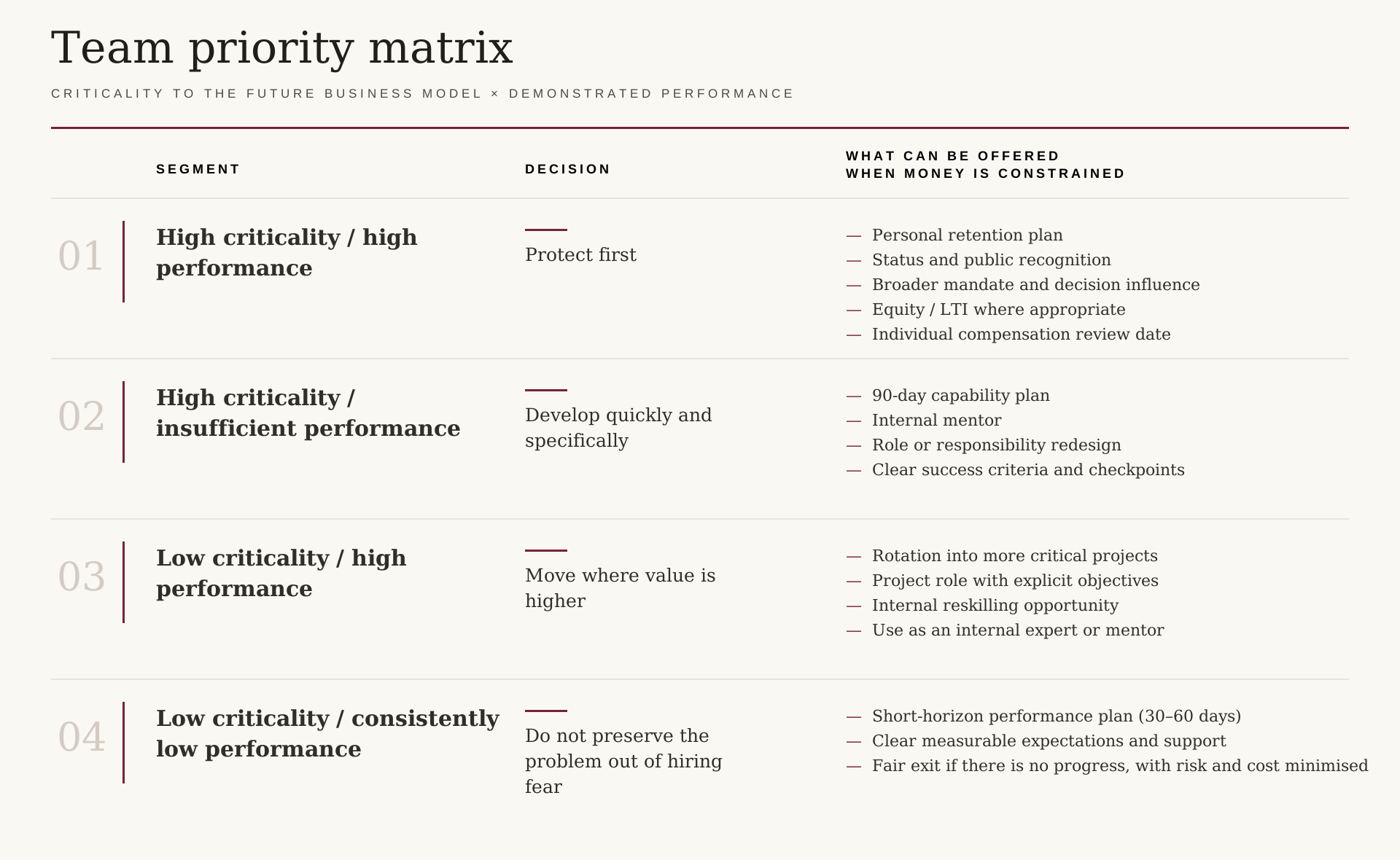
Segmentation is useful when it supports different investment decisions. Labels such as ‘dead weight’ are dangerous because they collapse poor performance, a bad role fit, weak management and genuinely chronic under-contribution into one category.
A more useful matrix has two axes: criticality to the future business model × demonstrated performance. It forces leaders to prove what value a role creates in the future system before making a people decision.
Radical transparency: what the team needs to hear
Every one or two weeks, the team should receive four layers of information: what has changed since the last update; what it changes for budgets, hiring, deadlines and priorities; what remains unknown and who owns the decision; and when the next update will arrive, even if there is no new information.
Predictable communication reduces the need to read a manager’s mood or collect rumours. People can withstand bad news considerably better than endless uncertainty combined with the demand to maintain yesterday’s pace.
Antifragility in operating practice
A crisis should trigger four mechanisms: redundancy in critical knowledge through documentation, shadowing and backups; modularity that lets the organisation stop a project without breaking everything else; small reversible experiments instead of whole-department reorganisations; and post-crisis learning focused on system change rather than blame.
A heroic organisation survives every crisis through the extraordinary effort of a few people. An antifragile organisation changes after the crisis so that the next similar event requires less heroism.
A model case: cutting the budget by 20%
Imagine a 30-person department. Before cutting six roles, map each function against cash flow, client risk and critical capabilities; stop work rather than merely remove people; calculate the bus factor for every critical skill; and compare retention cost with replacement and downtime risk.
Give anyone carrying more responsibility a clear mandate and a compensation review point in advance. After 30 days, measure not only savings but lead time, errors, overtime, sickness absence, turnover and client escalations. If cost falls 20% while delivery time rises 40%, the company has not become more efficient; it has moved the expense into less visible losses.
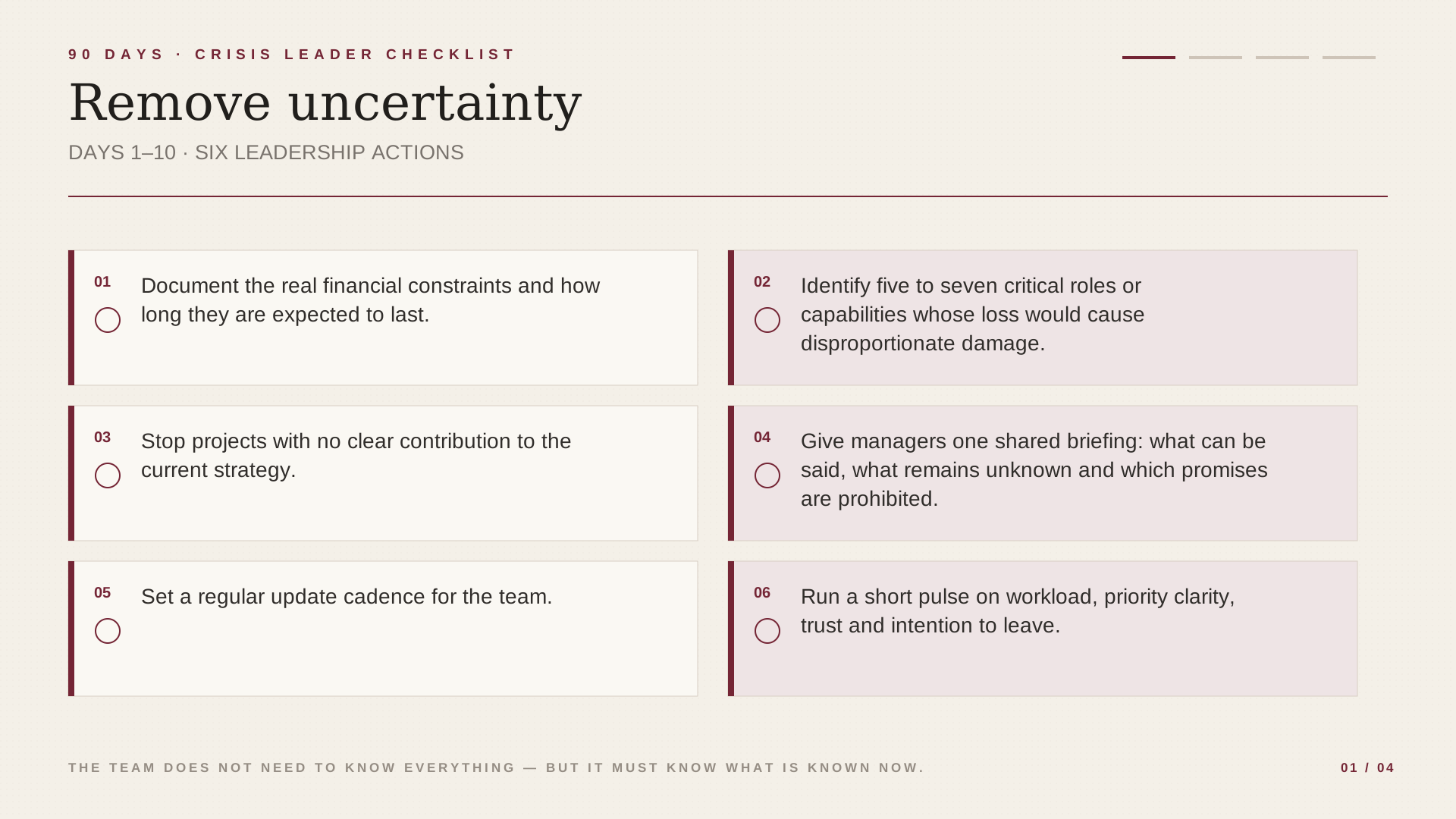
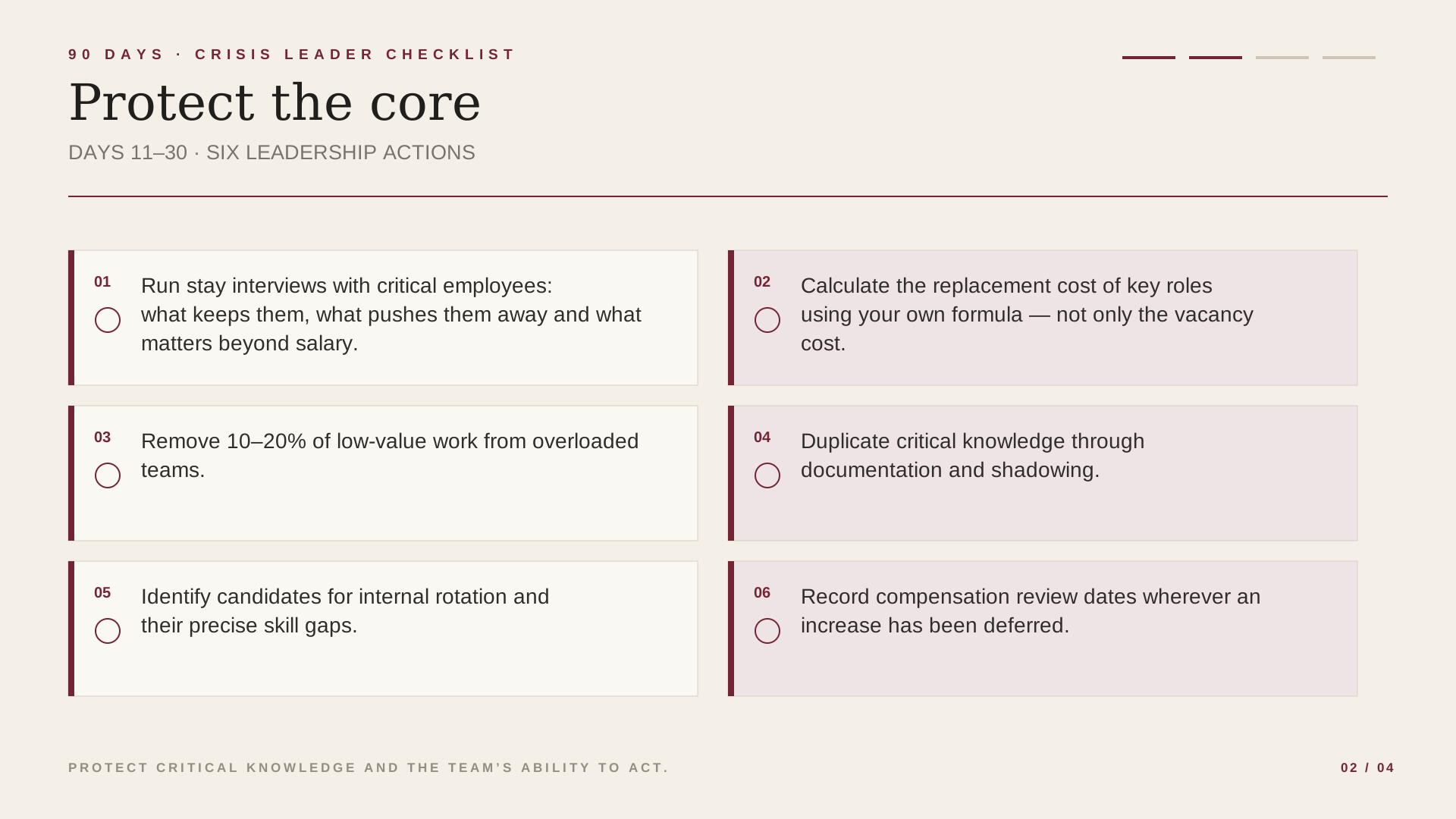
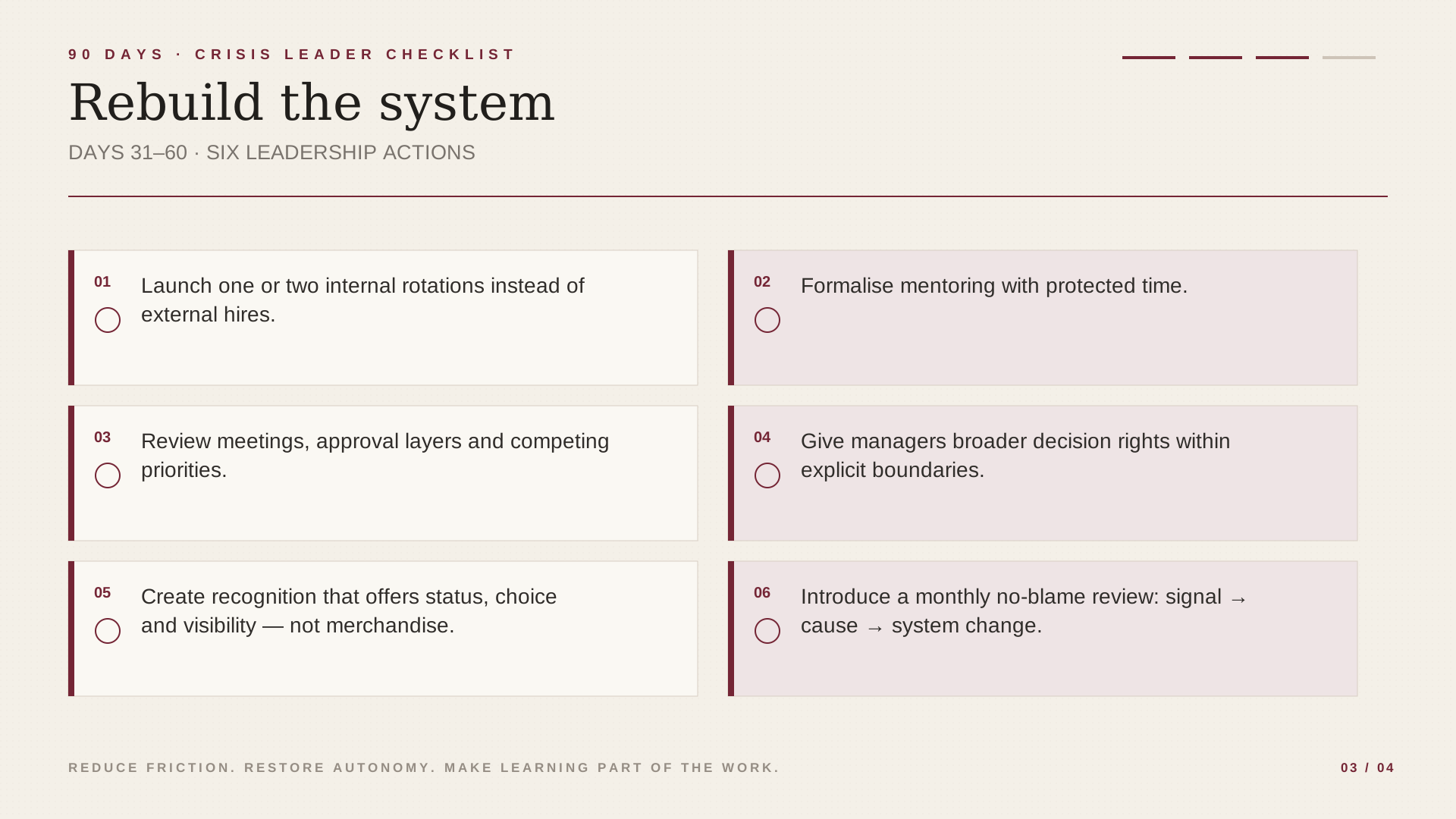
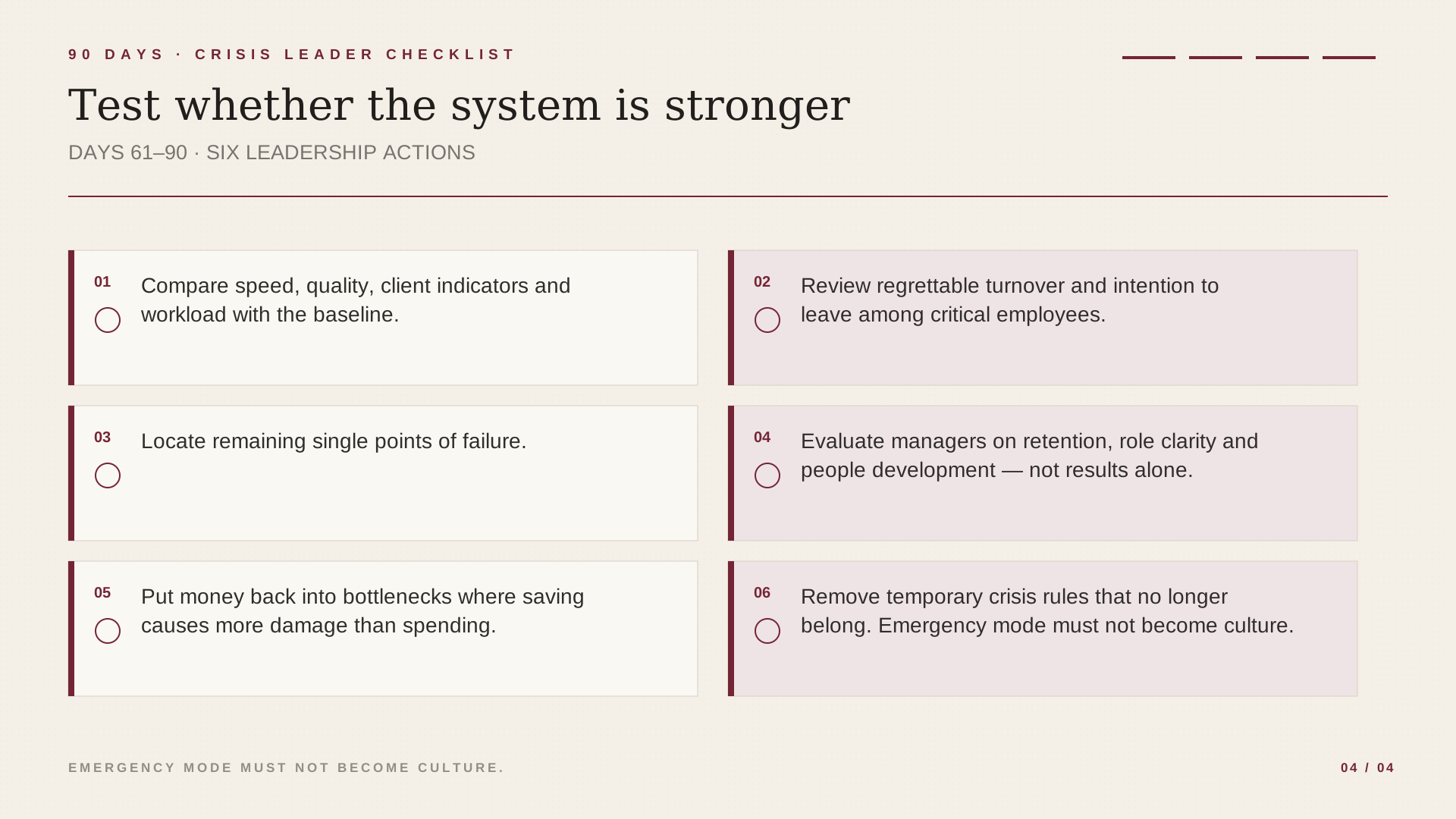
90 days: a crisis leader’s checklist
Four consecutive stages take the system from removing uncertainty to testing whether it has genuinely become stronger. Swipe or use the arrows; select any slide to open it at full size.
Research base
Gallup: State of the Global Workplace 2026; How to Engage Frontline Managers; research on employee wellbeing, burnout and turnover; Anemic Employee Engagement Points to Leadership Challenges; What 2025 Federal Reforms Did to Worker Engagement.
Amy C. Edmondson / Harvard Business School on psychological safety and speaking up; Edward Deci, Richard Ryan and colleagues on Self-Determination Theory; Frederick Herzberg’s Two-Factor Theory; Nassim Nicholas Taleb’s Antifragile; hh.ru research on skills-based organisations and Performance Review 2025.
An antifragile team is not one that has learned to live without resources. It is one that emerges from scarcity with less organisational friction, less dependence on heroics and a more precise understanding of where the next unit of investment should go.